








Singapore’s Renewable Energy Certificate (REC) landscape has become increasingly important for companies seeking credible, standards-aligned decarbonisation pathways — and offers a clear example of a broader shift across APAC. As regulatory expectations rise and assurance processes tighten, one principle stands out for organisations operating in Singapore: renewable electricity claims should be supported by RECs sourced within the same market boundary.
Market boundary requirements
Under the GHG Protocol Scope 2, ISO 14064-1 and RE100, companies are expected to match their electricity use with renewable energy instruments from the market in which electricity is consumed. Singapore’s national standard SS673 reinforces this guidance, recommending that buyers prioritise locally produced RECs and use ASEAN-sourced certificates only when local procurement isn’t possible.
For companies with operations in Singapore, this means that Singapore-origin RECs are often the most appropriate and straightforward option for high-integrity, defensible Scope 2 reporting.
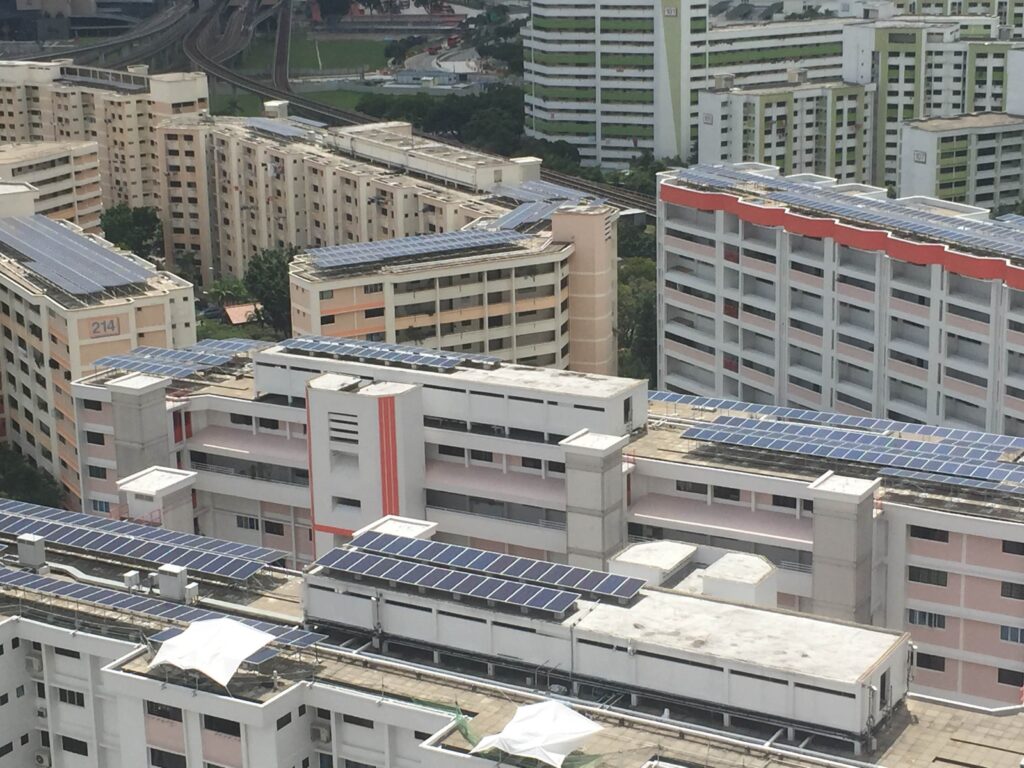
What’s driving the shift towards Singapore-origin RECs?
To make sense of the evolving guidance, it helps to look at the practical questions corporate buyers are actually asking – and how global standards consistently point toward local REC sourcing.
1. “Where should my RECs come from?” → They need to match where you use electricity.
Across major frameworks, the direction is consistent: If your electricity use is in Singapore, Singapore-issued RECs are the cleanest way to make a compliant renewable electricity claim.
SS 673 already identifies same-market sourcing as best practice, RE100 emphasises geographic matching, and draft updates to the GHG Protocol Scope 2 are pushing for even tighter alignment with real electricity system boundaries. Sourcing locally removes ambiguity and ensures your claims reflect Singapore’s actual grid conditions.
2. “Will auditors accept the RECs I bought?” → Local RECs meet quality expectations more easily.
Assurance bodies are shifting away from “any certificate counts” toward high-quality, geographically appropriate instruments. That means RECs must demonstrate:
- Clear traceability
- Unique ownership
- Correct market boundary
- Appropriate vintage and deliverability
Because Singapore RECs are backed by local registries and aligned to local and global standards, they naturally satisfy most Scope 2 quality criteria and support appropriate market-boundary application— reducing friction during audits and verification.
3. “Will this keep me aligned with SBTi or RE100?” → These frameworks favour local sourcing.
For companies with RE100 or SBTi commitments, the expectations are tightening:
- SBTi encourages the market-based method and uses RE100 thresholds as reference points.
- RE100 stresses geographic matching so that renewable electricity procurement reflects impact where operations are located.
For a Singapore facility, Singapore-origin RECs are the simplest way to meet these expectations without risking misalignment.
4. “Will regulators or CDP question my claims?” → Local RECs reduce disclosure and assurance risk.
ISO standards, CDP guidance and the GHG Protocol all emphasise transparency, traceability and accurate boundary application. Singapore-origin RECs align seamlessly with these expectations because their generation, registration and retirement occur within the same electricity market as the load. This alignment strengthens the evidence package provided to auditors and regulators, supporting high-integrity Scope 2 reporting.
5. “How do I future-proof my REC strategy?” → The world is moving toward tighter matching.
Emerging best practice is shifting toward more precise alignment between when and where renewable electricity is generated and when it is consumed. This includes:
- Closer geographic matching
- More granular temporal matching (e.g., annual → monthly → hourly)
- Stronger linkage to the carbon intensity of the local grid
Time-based matching is gaining prominence as companies and standards bodies look beyond annual REC purchases. Instead of matching renewable electricity to consumption over a full year, organisations are increasingly expected to demonstrate that renewable generation corresponds more closely to actual usage patterns. This trend is reflected in the GHG Protocol’s ongoing Scope 2 revision process and in the growing adoption of 24/7 carbon-free energy approaches among global leaders.
Because time-based matching depends on the characteristics of the electricity system where consumption occurs, it further strengthens the case for sourcing RECs from the same grid. For Singapore-based operations, Singapore-issued RECs help companies stay ahead of this shift and avoid future compliance gaps as standards evolve.
Options available to buyers
Corporates today have several procurement pathways:
- Spot purchases, offering flexibility but limited predictability
- Forward contracts, which provide price stability and multi-year budget certainty
- Local Singapore RECs, which align tightly with market-boundary rules and are generally preferred in audit and assurance processes
- ASEAN RECs, suitable only when justified under SS673 – typically only in situations where local Singapore REC supply is not available
The path forward for Singapore-based buyers
The direction of travel is clear: companies with electricity use in Singapore need RECs that reflect Singapore’s market boundary. Whether your organisation follows SBTi, RE100, ISO or simply wants robust Scope 2 reporting, Singapore-origin RECs are becoming the most credible and future-proof option.
CIX works with partners to help you procure verified, high-integrity Renewable Energy Certificates (RECs) in the same market boundary as your operations. To learn more about how these instruments can support your Scope 2 reduction strategy, reach out to contact.us@climateimpactx.com.