








European organisations committed to the Science Based Targets Initiative (SBTi), or preparing to set targets under its framework, face a higher bar for Scope 2 accounting under Version 2.0 of the Corporate Net-Zero Standard. For buyers of Guarantees of Origin (GOs) and Renewable Energy Guarantees of Origin (REGOs), V2.0 introduces geographic matching requirements, tighter generator eligibility rules, and for larger electricity consumers, a defined pathway toward hourly matching from 2030.
In a webinar hosted by Climate Impact X (CIX), Paulina Rakowska, Director of Client Development, unpacked what these changes mean in practice for buyers across the region.
Want to watch the full webinar recording and refer the presentation slides? Find them at the end of this article.
Here are five key takeaways from the session:
1. Scope 1 and Scope 2 targets are no longer interchangeable
Under V2.0, companies must manage and demonstrate progress on each emissions scope independently, closing a loophole where strong renewable electricity procurement could mask slower Scope 1 progress. Traditionally, Scope 2 was a straightforward process: buy certificates, retire them correctly and report the claim. SBTi is now asking whether that alone is enough. As Paulina explained, “SBTi wants to strengthen the link between electricity procurement and real-world decarbonisation”. This shifts the buyer’s question from “what is the cheapest certificate available” to whether the electricity is sourced through the new “Near, New and Now” eligibility standards.
2. Europe’s GO market is highly interconnected but not harmonised
While the EU framework standardises the certificates themselves, each country still sets its own rules around account ownership, transfers and retirement. Yet, trading often happens across borders. For instance, Germany is a major importer of GOs, while Norway, Sweden, France and Spain are key exporters (refer here for a deep dive on this topic). Paulina noted this means “renewable energy attribute markets increasingly operate at a regional rather than purely national level,” so buyers need to think beyond simply holding a certificate and focus on supporting evidence, transfer records and retirement documentation to back their claims.
3. Certificate choices now follow a strict hierarchy, with generator age as the biggest lever
Under the new implementation hierarchy framework, SBTi expects companies to prioritise direct interventions like on-site solar first, then market instruments such as Power Purchase Agreements (PPAs), green tariffs and unbundled GOs, before resorting to sector-level actions.
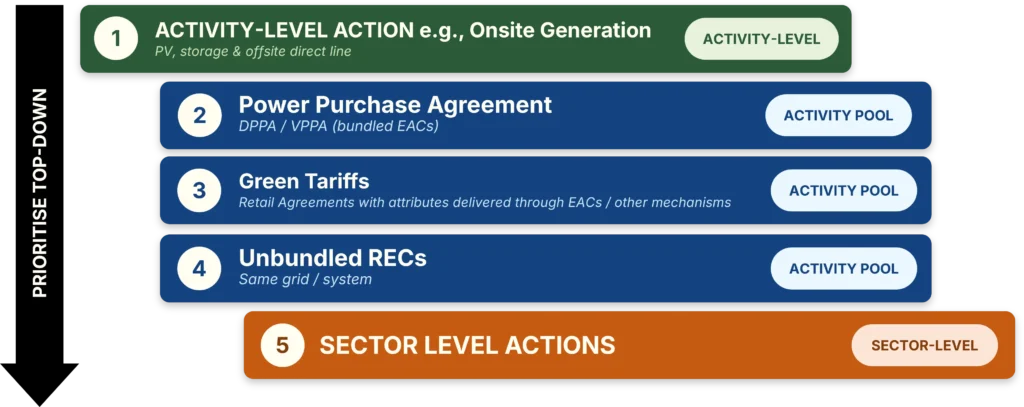
Within that market-instrument tier, the rule with the most teeth is the 15-year generator age limit: GOs procured in 2026 must come from assets built after 2011, hitting mature Nordic hydro hard while favouring younger UK power generation . Paulina noted this is “the requirement that gets more attention than hourly matching, because it has the potential to directly impact certificate availability and procurement costs”.
4. SBTi is pushing away the notion of certificates as commodities
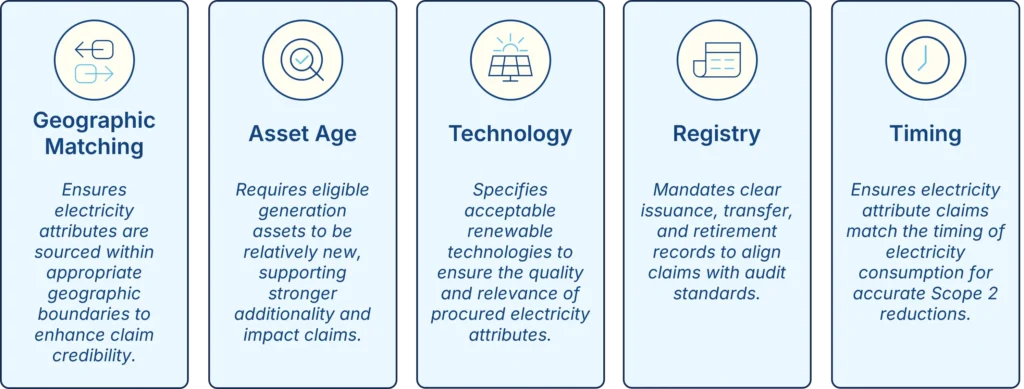
V2.0 introduces five formal integrity criteria that govern whether GOs and REGOs qualify for Scope 2 claims: geographic matching (ensuring attributes are sourced within appropriate geographic boundaries), asset age (favouring newer generation to support additionality), technology (specifying which renewable technologies qualify), registry (requiring clear issuance, transfer and retirement records for audit purposes), and timing (matching certificate vintage to the consumption period). Together, the upshot is that buyers can no longer buy GOs on price alone – each purchase now needs to be a considered procurement decision.
5. Hourly matching is a direction of travel worth watching
Annual matching remains the compliance baseline through a transition period lasting until January 2028, but SBTi is signalling that hourly (24/7) matching is where the standard is heading, especially for large “Category A” companies, who face enhanced reporting expectations. At CIX, we are already in conversations with multinational clients piloting 24/7 carbon-free energy strategies ahead of this shift, supporting them with specialised tracking and certificate solutions.
Preparation is the biggest advantage
The message from the session was clear: relying only on today’s Scope 2 rules may leave companies underprepared when V2.0 validation checks come in. Organisations that start assessing their certificate portfolios, sourcing strategies and audit readiness now will have more room to adapt than those that wait.
Want to explore how CIX can support your EAC procurement and SBTi alignment strategy? Connect with us at contact.us@climateimpactx.com to get started.
For further reading, head to our corporates or perspectives page.
See webinar presentation slides here.
Let’s Connect
Align your EAC strategy with SBTi V2.0. Let’s connect!
Corporate Buyer Form
"*" indicates required fields